The question of how Artificial Intelligence might support, enhance, or even undermine art and creativity is part of an ongoing debate, deeply connected to Digital Humanism and the Digital Divide. And the next question, should “art”, especially non-western art, be defined solely through western narratives? Should not multiple interpretations coexist? This touches on the question of bias in AI. In a recent guest lecture, Victor de Boer, one of the directors of the Cultural AI Lab, explored the concept of polyvocality in Culture and AI. This perspective takes on special significance in the context of the decolonisation debate.
“Knowledge graphs are a popular way of representing and sharing data, information and knowledge in many domains on the Semantic Web. These knowledge graphs however often represent singular -biased- views on the word, this can lead to unwanted bias in AI using this data. We therefore identify a need a more polyvocal Semantic Web.” wrote Victor de Boer, co-director of the Cultural AI Lab, one of EURIDICE’s ecosystem partnerships.
Victor de Boer, Associate Professor at the User-Centric Data Science group of VU Amsterdam recently made a study visit to UNIMAS in Sarawak, Malaysia where he gave an expert lecture about Polyvocality, AI and Cultural Heritage to staff and students of this university. His lecture on 8 April 2025 was also attended virtually by the participants of the ICT4D course at TU Wien, simultaneously.
Victor combines Semantic Web Technologies with Human-Computer Interaction, Knowledge Representation and Information Extraction to tackle research challenges in various domains. This includes Cultural Heritage, Digital Humanities and ICT4D. One of his project is HAICu, a project in which also Koninklijke Bibliotheek particiaptes, to investigate perspective-aware AI to make digital heritage colections more accessible.
In Sarawak, together with EURIDICE’s associate partners from UNIMAS, Associate Professor Dr. Cheah WaiShiang and colleagues from the Faculty of Computer Science and Infrmation Technology, and VU colleagues Dr. Lea Krause, and master student Eva Heemskerk, he explored Polyvocality through Knowledge Graphs, to explore the multiple narratives of cultural heritage. In a post-colonial world, looted art that ended up in museums, archives,libraries in the former coloial powers, often lack the original stories of the objects. They are often biased, univocal, often culturally unsensitive and express a single view. See Victor’s slides at http://www.victordeboer.com/wp-content/uploads/2024/05/VictorSemmesKeynote.pdf
Based on several master research projects, Victor and his students have explored how knowldeg graphs can expose the multiple narratives, giving a voice to the original owners of he cultural heritage objects.
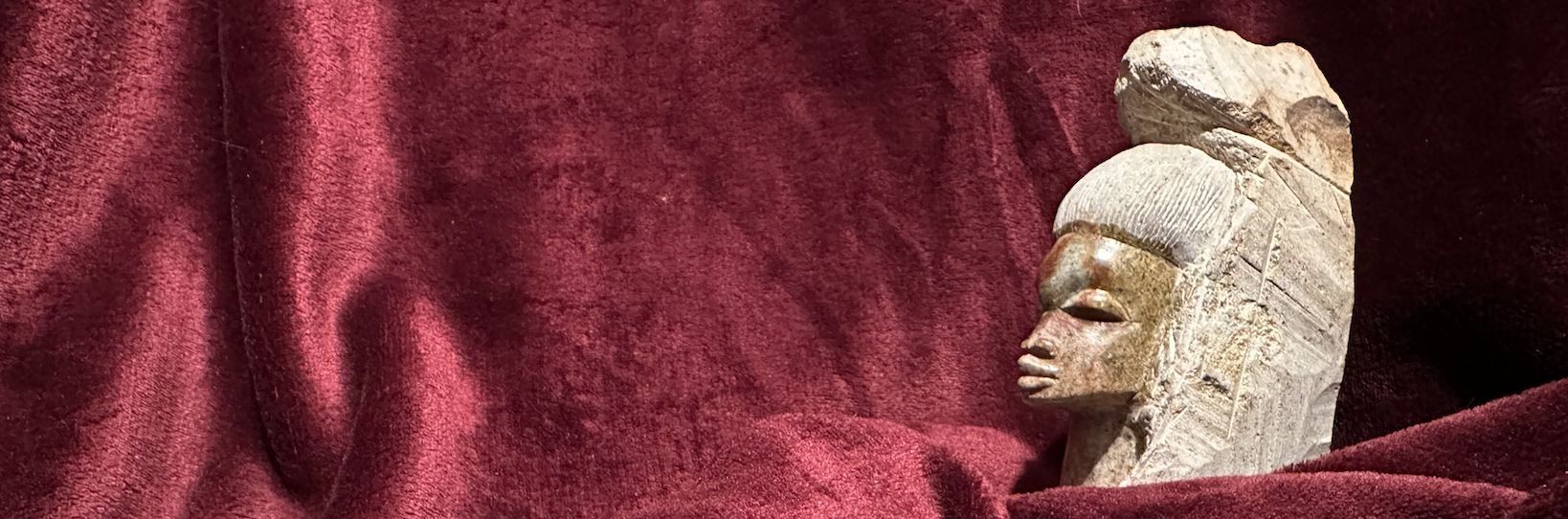
See also the featured image: an indigenous Gabonese artwork of a woman’s face, perhaps a goddess or ancestor, now in a European art exhibition. This image reminds us that “art” is never a single story.
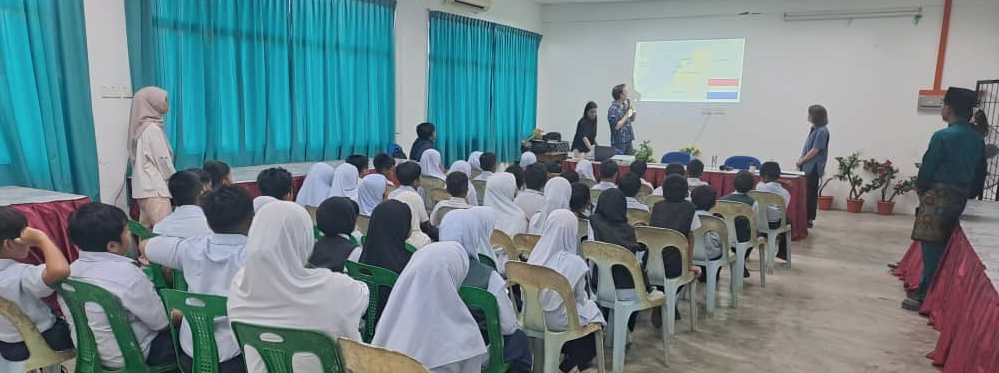
Figure 1: Associate Professor Victor de Boer teaching in Sarawak, April 2025.
*) Featured photo: An indigenous artwork from Gabon: the face of an African woman, perhaps a goddess or ancestor, greets the reader of this post.
The workshop, educational programme and travel and accommodation of the VU educational staff to Sarawak Malayisa was partially funded through a grant by Erasmus+.