
Reflective Narratives of the Digital Society — Internship project for DIGISOC students

EURIDICE announces a new Audio-Visual Communication action-research/design science internship for 2nd year students in the master “Digital Society, Social Innovation and Global Citizenship”. This internship is organized and will be supervised by four EURIDICE partners: Pangea, Leeuw Film, Babafla, AKMC, in close collaboration with filmmaker Albert Kuhn (Spain) and filmmaker Aleix Massot, director of the Barcelona Cinema School, (Spain). This internship is part of the DIGISOC study program and leads ... Read more
Software Engineering after AI – panel and expert talk
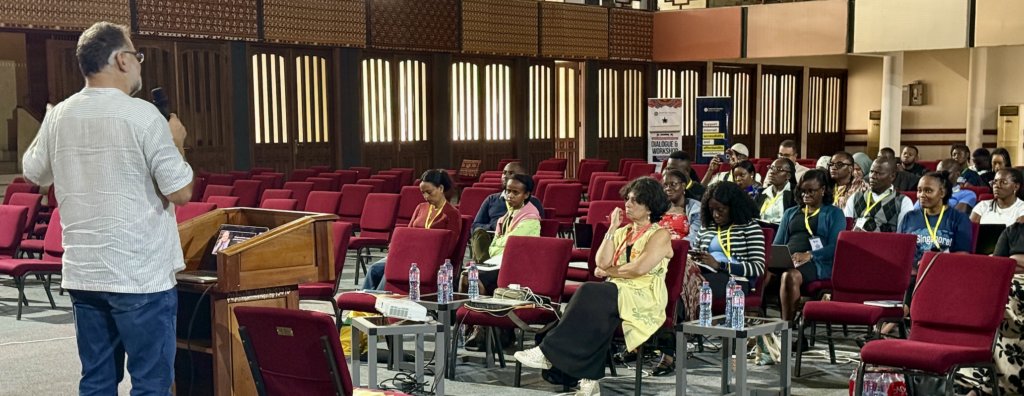
On September, 1st 2026, a hybrid presentation plus panel discussion took place in Accra, entitled Software Engineering after AI. This was a an invited talk by Prof. Carlo Ghezzi (Politecnico di Milano, Italy), followed by an (onsite) panel discussion. In his talk, Carlo Ghezzi argued that software is the crucial technological component of our society today. The current state of (SE) research, education and practice is largely inadequate in view of this crucial role. SE is not a purely ... Read more
National Library (KB) starts new CULTURAI research project

Together with an international consortium of universities, knowledge institutions and cultural organisations, the KB has been awarded a grant of 5 million euros for the CULTURAI research project. This research lays the foundation for a unique international virtual Competence Centre for AI in the cultural and creative sector. From 2030, this knowledge centre will support cultural institutions and creators in the responsible use of artificial intelligence. Responsible use of AI ... Read more
PhD Summer School addresses Digital Humanism from the Global South Perspective
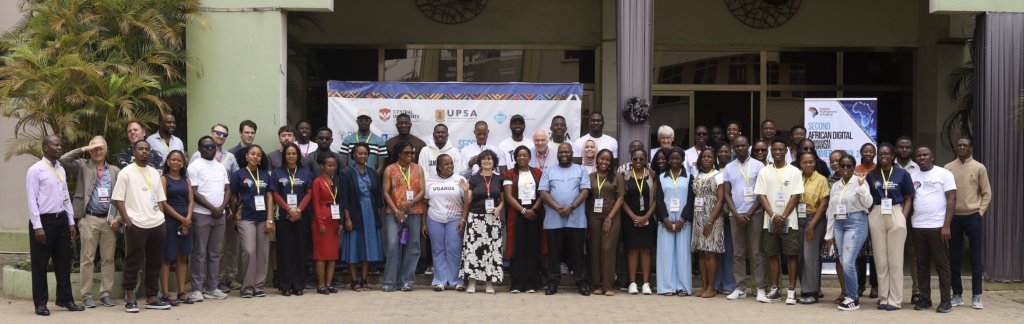
Accra, 6 September 2026, we just concluded, very successfully, the Second African Digital Humanism Summer School, one of the outreach events of the EURIDICE project, chaired by associate partner UDS. To this educational event, 61 PhD and post-graduate students from 11 countries have actively participated. From this group, 50 students fully completed all requirements of the School, and obtained a 2-ECTS MicroCredential Certificate (compliant with the EU Guidelines). There was ... Read more
by
Successful 5th ACM Digital Humanism Summer School

Vienna 10 July – Today is the last day of this amazing Summer School on the topic of Democracy in the Digital Age. Building on the success of previous editions, the aim of the Summer School is to provide a learning environment and platform to explore, investigate and discuss key issues and latest developments related to the impact of Digital Technologies to democratic societies. Internationally renowned and leading academics from ... Read more
by
Digital Humanism Conference in Vienna – “Orientation in Turbulent Times”

Vienna, 25 June 2026 – For participants of EURIDICE this is an important and relevant public event to attend, in which many aspects of the Digital Society are being addressed. The Digital Humanism conference started Wednesday evening with the screening of “The Ghost in the Machine”, a film directed by Valerie Veatch. “Artificial intelligence’s unsung beginnings are found in power rather than computers, illuminating the dreams that underlie the hype ... Read more
by
18th June – International Panic Picnic Day and the 70th anniversary of Dartmouth workshop on AI”

The TU Wien and the Digital Humanism steering committee are pleased to invite you on short notice to this special event celebrating the 70th anniversary: Thursday, June 18, 2026 at 10:00 a.m. (10:00) Central European Summer Time (UTC+2) Topic: “18th June – International Panic Picnic Day and the 70th anniversary of Dartmouth workshop on AI”It’s June 18th: That’s International Panic Day, International Picnic Day, and this year the 70th anniversary of Dartmouth Summer Research Project ... Read more
EURIDICE and DIGISOC win two awards at Global Citizenship Symposium

Amsterdam, 29 May 2026 – At the last day of the very successful Global Citizenship Symposium, organized in Amsterdam by the Aurora network of European Universities, two out of three awards went to EURIDICE. A joint team of EURIDICE researchers won the best presentation award. The best poster went to the DIGISOC students. The Global Citizenship Symposium brought together academic staff and students from many countries to discuss themes of ... Read more
by
EURIDICE’s contributions to the Global Citizenship Conference in Amsterdam

Many EURIDICE partners and also DIGISOC students contributed to the success of the Global Citizenship Conference at VU Amsterdam, from 27-29 May 2026. See link to the conference site and table below. https://vu.nl/en/events/2026/aurora-symposium-on-global-citizenship
How do platform companies earn their money?

How do digital platform companies earn their money? That is the central question that Nedo Bartels, researcher at EURIDICE partner Fraunhofer-IESE, investigates in his PhD thesis. To this end, Nedo has developed a taxonomy that conceptualizes in a structured fashion the various important dimensions and characteristics of platform revenue models. Nedo’s taxonomy is based on a comprehensive analysis of the existing scientific literature. In addition, the validity of the taxonomy ... Read more