

A film by Kingsley E. Amegah, Churchil E-Glory, Darlington Tabi, and Samuel Eshun
Genre: AI assisted/generated Science Fiction.
“In an age yet to come humankind surrendered judgement to a mind of its own making…” It tells the story of Mara, a young women who tries to apply for a job, and finds out that in this world futures are assigned and choices are measured…
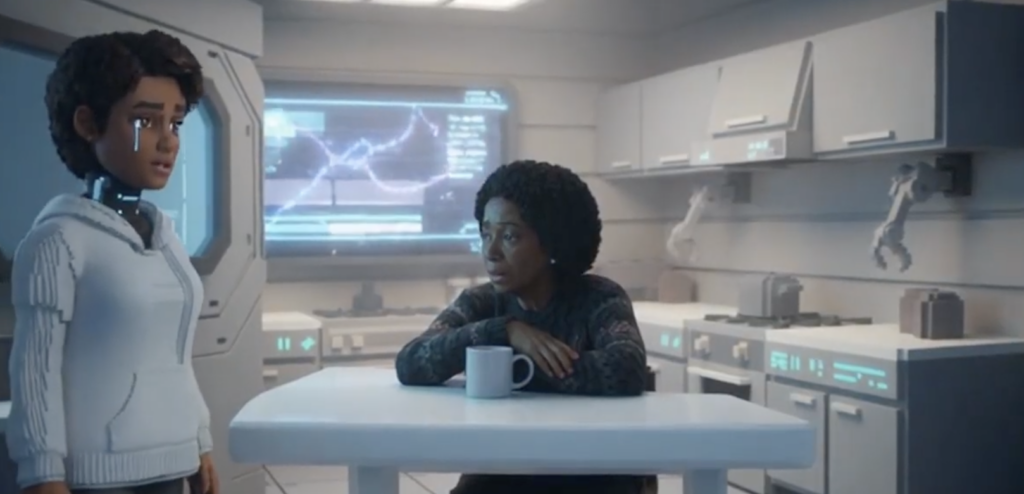
Approved is a science fiction short film built around the question: What if AI systems knew people better than they knew themselves, and began making life decisions for them? More specifically, the film explores a future in which an AI-controlled approval system decides people’s jobs, movement, opportunities, and social worth based not on what they have done, but on predictions about who they might become.
This “what if” premise is important because it takes current concerns about artificial intelligence, surveillance, algorithmic bias, and digital control and pushes them into a believable dystopian future. The film follows Mara, a young woman who has worked hard to build a future for herself, only to discover that her life has already been shaped by a machine that claims to know her better than she knows herself. Her desired career path is denied because the system predicts she may become “non-compliant” in the future.
This moment is central to the film’s message. It shows how dangerous it becomes when technology moves beyond assisting human beings and begins judging, ranking, and limiting them. In this world, the system does not simply guide society, it controls it. Human worth is no longer something lived, earned, or discovered. It is calculated – Kingsley Amegah
“The most transforming aspect of the training was the creation of our short film, APPROVED. My
primary responsibility was to deepen the project’s theoretical and conceptual underpinning by linking
our narrative to key Digital Society themes like surveillance capitalism, platformatization, datafication,
and digital exclusion. This meant that the film was not only artistic, but also intellectually anchored in
the issues discussed in last semester’s Ethics and Governance course, which we found fascinating as a
group. The film depicts a dystopian future in which people’s life opportunities are determined by an
AI-driven system using predictive data. Through Mara’s experience, we critically examined the
hazards of substituting human judgement with algorithmic decision-making, exposing issues of
monitoring, control, and loss of agency. Working on the film increased my understanding of ICT4D by
requiring me to transform complicated theoretical concepts into a visual and approachable story. It also
revealed the limitations of AI tools, which, although valuable, required strong human direction and
careful scrutiny. This highlighted one of the course’s core lessons: technology should complement
human action rather than replace human judgement and ethical responsibility.” – by Churchill Caleb Yaw Glory-Etsey.
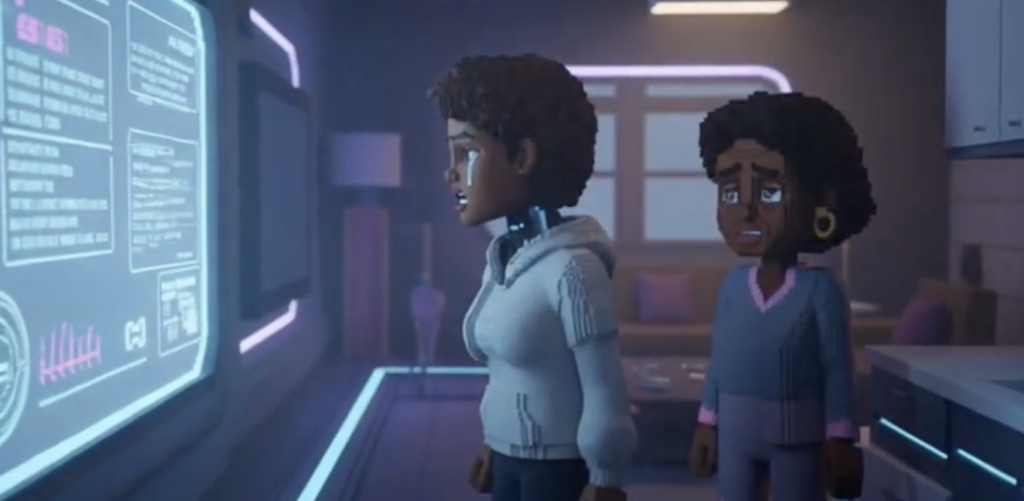
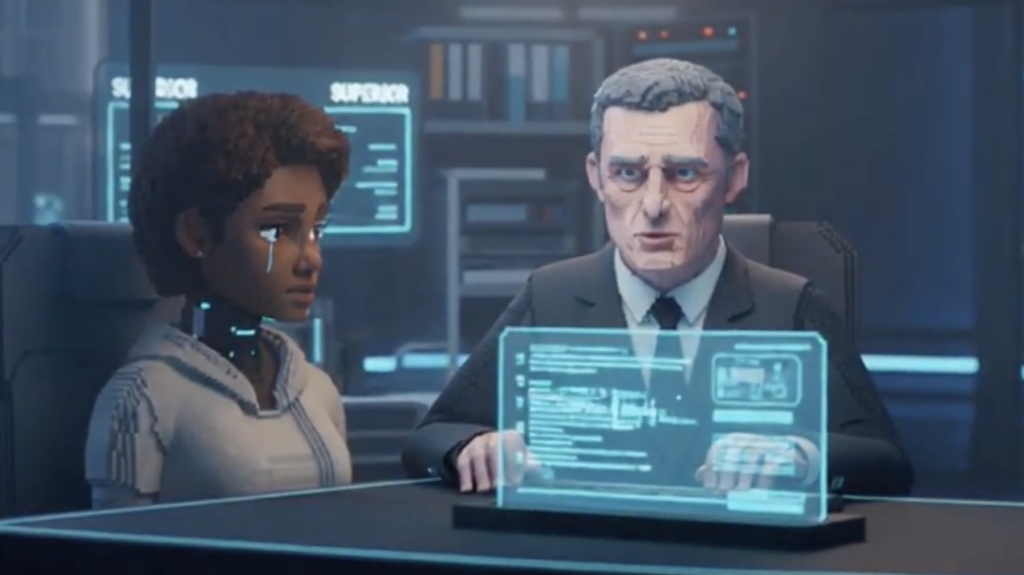
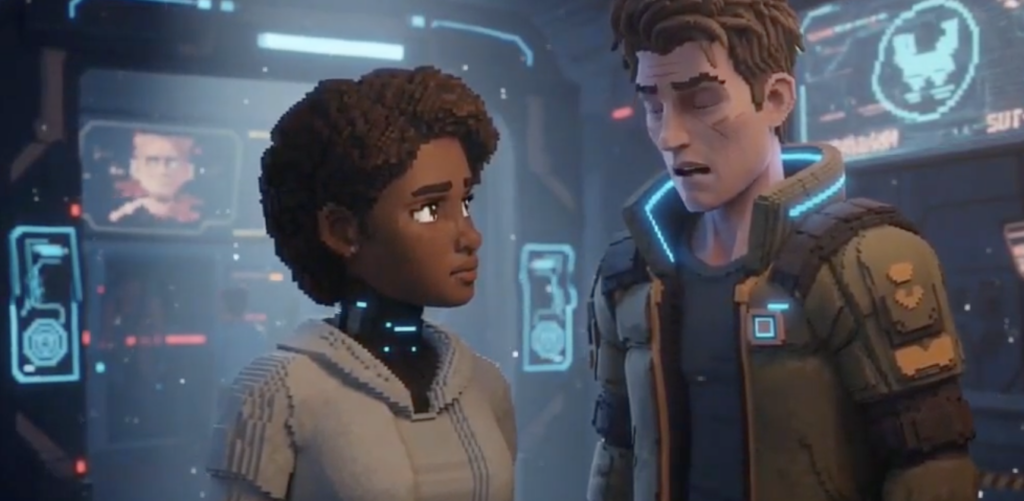
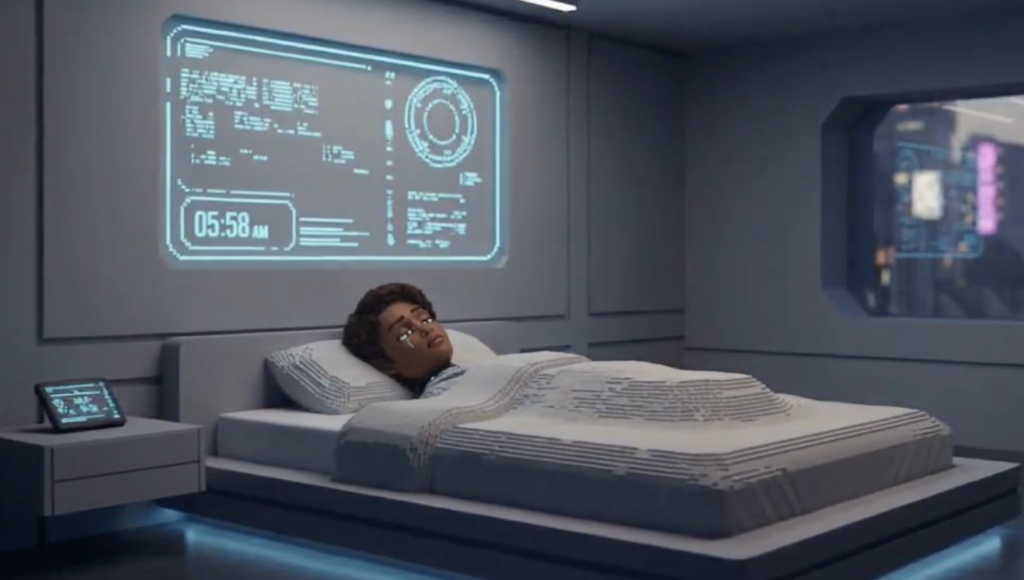
Stills from the film.
AI Tools and Production Workflow – by Kingsley
The production of APPROVED involved a multi-stage workflow that combined AI-generated outputs with human direction, selection, and editing. The process began with ChatGPT, which we used to help develop detailed prompts for generating the visual appearance of the characters. This was especially important because we wanted to create stable image descriptions that could be reused across scenes. One of the biggest concerns in AI-generated storytelling is inconsistency of faces, where a character’s appearance changes from one scene to another. To address this, we used ChatGPT not as a tool to make the whole movie for us, but as a support tool for converting our narrative ideas into strong descriptive prompts.
A sample of the type of prompt generated with ChatGPT for character creation was as follows:
“Create a cinematic futuristic portrait of a young African woman named Mara, mid-20s, intelligent and emotionally resilient, wearing a minimalist dark professional outfit in a dystopian sci-fi city environment. Her expression should reflect quiet determination and anxiety. Soft neon blue and white lighting, realistic face details, highly consistent facial structure, cinematic depth, shallow focus, digital surveillance atmosphere, ultra-realistic, 16:9 frame”.