
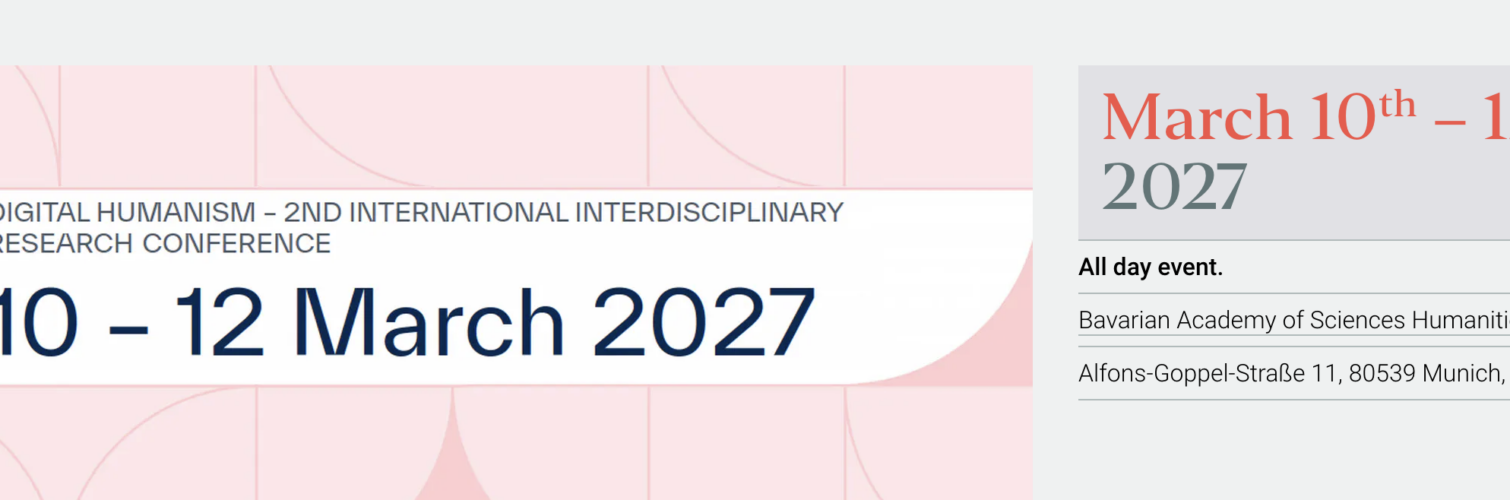




In 2019 the Digital Humanism Manifesto was launched by an international group of academics from different disciplines. Since 2025 the community has started a research conference: the Digital Humanism Interdisciplinary Science and Research Conference. It provides a platform for interdisciplinary dialogue on the profound impact of digitization, exploring both its promises and risks.
Digital Humanism is described as an approach that describes, analyzes, and, most importantly, influences the complex interplay between technology and humankind, striving for a better society while fully respecting universal human rights. Addressing the challenges of the digital age requires collaboration across disciplines, from computer science to the humanities, to ensure technological advancements align with human values and social well-being.
At the Digital Humanism Interdisciplinary Science and Research Conference (DigHum-Res) selected peer-reviewed papers will be presented that represent diverse perspectives, including governance and regulation of AI, privacy and digital rights, participatory approaches, the role of tech monopolies, human-centered AI, and the environmental impact of digitization. A wide range of research methodologies have been used for these diverse research projects, ranging from theoretical reflections to empirical studies, fostering a shared understanding that bridges technical and societal viewpoints.
See links: https://caiml.org/dighum/dighum-res/