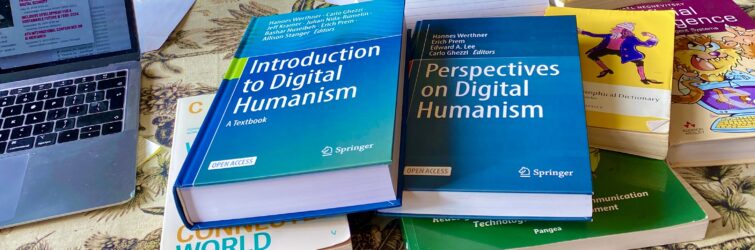
Digital Humanism to the Rescue!

Vienna, 28th April 2026 – Professor Peter Knees, UNESCO Chair on Digital Humanism, and member of the EURIDICE team, gave his inaugural lecture at TU Wien, on 27th April, about Music Recommender Systems. Recommender systems are algorithms that analyse user data and online behavior such as clicks and ratings, to suggest personalized content, in this case music. In his lecture, Peter Knees presented the latest results and developments in Music Recommender Systems. From this, he … Read more

Panel discussion: AI and the integrity of survey research

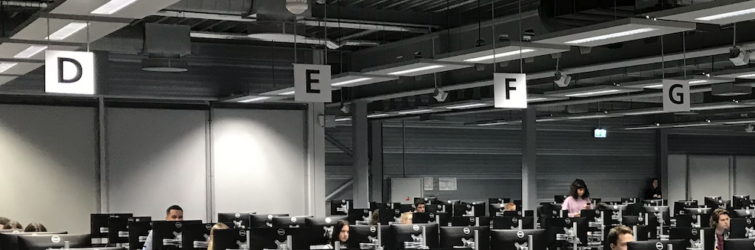
In a panel discussion, Dr. Philipp Masur, Prof. Reinout de Vries and Dr. Anna Bon met and discussed about the growing challenges posed by artificial intelligence to the integrity of online survey research. The panel discussion was moderated by Tycho Hofstra and Agustin Medina, research data steward at the Faculty of Behavioural and Movement Sciences, focused on a practical problem: as AI becomes more accessible, the risk of receiving automated or AI-assisted responses in surveys increases, which threatens … Read more

Orpheus: an AI-supported Content Management System for Education

Building a large course programme and corresponding extensive course catalogue with 24 project partners across 15 countries is a major undertaking. It requires significant efforts from many different parties and especially teaching staff simultaneously, and coordination of tasks. Therefore, project partner Babafla have designed, developed and implemented an AI-supported tool ORPHEUS, that supports the production of course descriptions, and does the automatic generation of course catalogues. From the raw data, collected from all course providers, … Read more

Where exactly are you? Geocoding for Disaster Response in India – a new master thesis

Evaluating AI-enhanced Geocoding for Informal Locations – a new master thesis by Adithya Vasisth on a research subject of the Digital Divide, the Digital Society and Global Citizenship. Abstract – Crisis mapping technologies assume every person has a formal address, a reliable internet connectivity, and communicates in English. Most disaster-affected communities have none of these. When disasters strike, affected populations report emergencies through platforms promising democratized response. Yet a persistent bottleneck emerges: translating informal location … Read more

Digitalization and Digital Humanism: Fundamentals, Potentials, Risks – lecture series

A newly designed lecture series ‘Digitalization and Digital Humanism’ is starting in Vienna, Austria. The focus is on how our lives will change, in this rapidly advancing age of digitalization and artificial intelligence. The pressing questions are: Which role will humanistic principles play in this? Which skills are needed to actively and responsibly shape this digital transition? The aim of this lecture series is to teach applicable skills and to show that technological possibilities must … Read more

Publication:”AI Is Not the End of Art”

Habitat

Many people seem to think that soon all music, images, films, books, and articles will be generated by AI, and that this will mark the end of human-made art. But this won’t happen anytime soon, because AI approaches creativity in a way that is fundamentally different from humans.The art world is in turmoil over the AI revolution. Some claim that the human creative process is outdated and that AI is already a better artist than … Read more

“Combining scientific and indigenous knowledge”

How can we integrate indigenous and scientific knowledge systems to address global challenges in the world? A new educational resource for EURIDICE’s educational offer has appeared, in the spirit of “Digital Society, Social Innovation and Global Citizenship”, addressing the United Nations Sustainable Development Goals (SDG), with a strong focus on Global Citizenship. Abstract It is widely believed that modern technologies such as Information and Communication Technologies (ICTs) for Development (ICT4D) provide important innovative intervention instruments … Read more

Penelope: Culture and the Digital Society

AI neural networks are trained on millions of cat pictures to be able to recognize a cat.

The wish and promise to further expand and strengthen EURIDICE’s cultural ecosystem, including also creative sectors in Europe, brought a subset of the EURIDICE consortium, to engage in a new partnership and prepare a project plan to enhance the digital skills and create synergies with several cultural partners in six European countries. This new collaboration has led to new thematic synergies between the cultural, digital- technological and higher educational sectors. This new collaboration will provide … Read more

EURIDICE Biannual Event in Lisbon

From March 10–12, the EURIDICE Consortium gathered for a productive and inspiring three-day meeting at Lusófona University in Lisbon. Representatives from nearly all partner institutions participated—coming from Portugal, Spain, Iceland, Germany, France, the Netherlands, Italy, Greece, Austria, Slovakia, the Czech Republic, Ukraine, and Ghana—with a few joining the sessions online. The meeting was marked by dynamic exchanges on joint education initiatives, including microcredentials and international collaboration. In addition, participants had the opportunity to attend several … Read more

UNESCO chair on Digital Humanism

At TU Wien, Dr. Peter Knees and Dr.Julia Neidhardt are the UNESCO chairs. For EURIDICE they organized various events and lectures.In Amsterdam, on January 2025 – Julia Neidhardt presented the Digital Humanism philosophy and how this is implemented in a quickly expanding community. She gave the following lecture: Abstract The Digital Humanism Initiative is an international collaboration seeking to build a community of scholars, policy makers, and industrial players who are focused on ensuring that … Read more