
Applications Now Open: DIGISOC Joint Master’s Programme 2026/2027
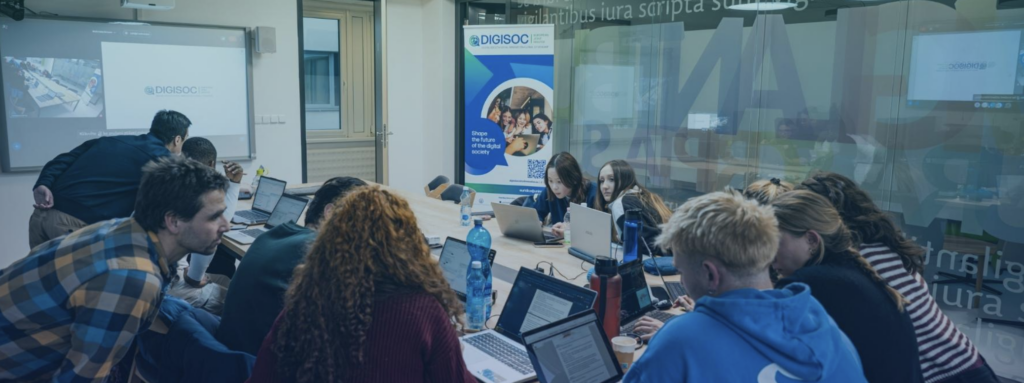
Are you passionate about digital transformation and social innovation? The DIGISOC European Joint Master’s Programme is now accepting applications for the 2026/2027 cohort. What is DIGISOC? The Master Digital Society and Global Citizenship (dubbed DIGISOC) trains the next generation of socio-digital innovators — professionals who can bridge the gap between advanced digital technologies and meaningful social change. This two-year programme combines expertise from three European universities across Italy, Austria, and ... Read more
by
New course: Nurturing ‘seizmic’ Change

This course at Copenhagen Business School (due 20-24 April) is designed for colleagues teaching or researching in social entrepreneurship, sustainability innovation, or business modelling. Beyond the pedagogical content, one of our central ambitions is to build a sustained Erasmus+ community of educators in this space. The BIP is meant as a starting point for deeper collaboration and may well lead to future joint funding applications. Substantively, the week focuses on ... Read more
by
Blog: Steps towards Digital Autonomy

How do we move towards a more inclusive and sustainable city where the technology we adopt is under our own collective control? What is needed to make progress on that journey and what is the role of academia, governments, societal organisations and private companies? These were the guiding questions for an event that Waag Futurelab organised in collaboration with the VU in the iconic 1691 Waag building in the city centre ... Read more
Event: Polis Digitalis with MEP Brando Benifei
Last week at TU Wien, organized by the members of the Digital Humanism community, a Polis Digitalis Series has started, with an online interview with Brando Benefei. Brando Benifei is member of the European Parliament; after having served as a co-rapporteur of the AI Act, he is now the chair of the EP delegation for relations with the US. The interview was led by Janis Brühl, who is one of Germany’s ... Read more
by
Blog: from Greenland to Cloud: Geopolitics of Digital Infrastructure

And why the DIGISOC master is so important nowadays… What does a dispute over Greenland have to do with your hospital appointment, your unemployment benefits, or your ability to register a vehicle? More than you might think. Recent geopolitical tensions between the United States and Europe have exposed a vulnerability that runs deeper than trade tariffs: Europe’s critical digital infrastructure is overwhelmingly dependent on American cloud providers. The numbers behind ... Read more
by
Blog: Urgent call for AI Red Lines and AI Governance

As Europeans and global citizens we are seeing risks in the Digital Society increasing as we speak. For example, the European Commission has released Digital Omnibus Package, on 19 November 2025, towards simplifying the digital regulatory framework across data access, privacy and cybersecurity. This has major consequences for citizens’ rights. Framed as an improvement in European legislation to facilitate the European industry and promote European competitiveness, form the citizen’s perspective ... Read more
by
Publication:“Between Parliament, Newspapers, and Social Media”
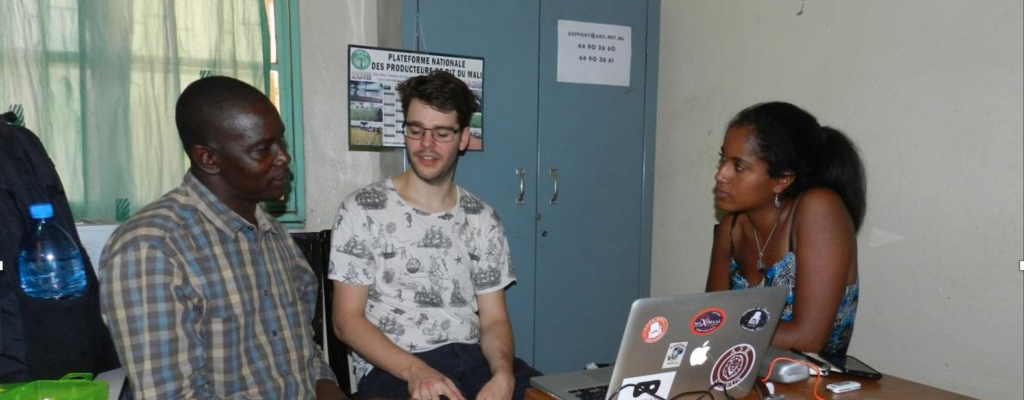
On 11 February 2026, the Netherlands State Commission against Discrimination and Racism has published an important new study, “Between Parliament, Newspapers, and Social Media”. It shows that statements made by politicians about population groups, reports in national newspapers, and responses from social-media users can influence and reinforce each other. Statements by politicians, such as speeches and interruptions, have a particularly stimulating effect: when they speak more frequently, more negatively, or ... Read more
Event: Critical Digital Technologies and Future Strategic EU Investments
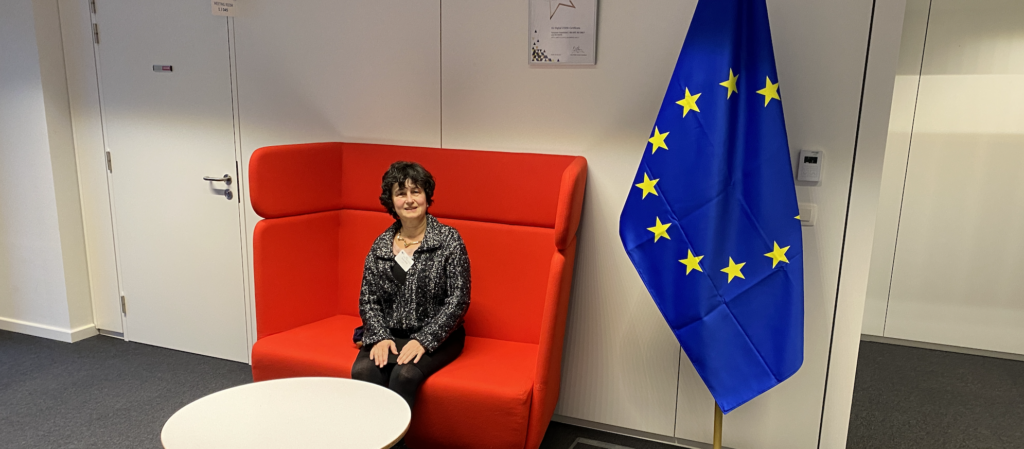
The direction of post-2027 strategic investments in Research & Innovation of Critical Digital Technologies (such as AI) was the central topic of an EU expert advisory workshop in Brussels, organized on 05 February 2026 by the European Commission’s Directorate-General for Communication Networks, Content and Technology (DG CNECT). Anna Bon and Hans Akkermans, from the EURIDICE project, were invited to participate as experts. Anna Bon emphasized the strategic importance of a human-centric ... Read more
Publication: Digital platforms and their revenue models

EURIDICE consortium partner Fraunhofer IESE has published research addressing a critical challenge in platform business model design: how platforms capture value among different actors in digital ecosystems. The study presents a comprehensive taxonomy comprising 15 dimensions and 64 characteristics that classify revenue models for digital platforms. Using design science research methodology, the authors developed and empirically evaluated the taxonomy through iterative cycles involving literature review and case studies. A controlled ... Read more
by
New course: Generative AI in research, innovation and education

The quick emergence of Generative Artificial Intelligence in all sectors of the economy as well as daily life poses new challenges for Society. In the past period a group of EURIDICE partners have been involved in co-designing and lecturing courses in Generative AI covering a wide interdisciplinary range of topics, and addressing some pressing questions such as: Technical practice: how does one practically usefully employ LLM systems (good “prompt engineering” ... Read more
Orpheus: an AI-supported Content Management System for Education

Building a large course programme and corresponding extensive course catalogue with 24 project partners across 15 countries is a major undertaking. It requires significant efforts from many different parties and especially teaching staff simultaneously, and coordination of tasks. Therefore, project partner Babafla have designed, developed and implemented an AI-supported tool ORPHEUS, that supports the production of course descriptions, and does the automatic generation of course catalogues. From the raw data, ... Read more